First Day on a Mine Site: What to Expect in Your First Mining Job
From the 4am flight to your first night in camp: inductions, PPE, pre-starts, site tours and how to make a good first impression on your first day on a mine site.
03/10/20267 min read
Starting your first mining job is exciting, but walking onto a mine site for the first time can feel overwhelming. The good news is that your first day is usually more about inductions, safety training and meeting your crew than actually doing your job.
I still remember my own first day as a Graduate Mining Engineer at an underground mine. I had a mining engineering degree, but within hours I realised how little I actually knew about working in a real mine. New words everywhere, people talking about equipment and locations I had never heard of, and a completely different way of working.
Since then, I've worked across different mining roles and watched plenty of new starters go through the same thing. If you're still looking for that first role, start with my guide on how to find a job in mining in Australia.
Here's what to realistically expect, from the airport to your first night in camp.
Before You Fly
For many FIFO jobs, day one starts at the airport, often with a 4am alarm and a terminal full of people in hi-vis.
The night before, confirm your flight time and check-in location, especially because charter flights can work differently. Pack your photo ID and any licences or tickets you've been asked to bring, and get some sleep. Hours of inductions are much harder when you're exhausted.
Not sure what to pack? The FIFO Guide comes with a bonus Packing Checklist covering your first swing, every swing and what not to bring.
At the gate, don't expect much conversation. Most experienced FIFO workers have done the trip hundreds of times and are just trying to get another hour of sleep.
Arriving at Site
Once you land, a bus will usually take you to camp or straight to the mine. If you've never been to a remote site, this is where the isolation can really hit you. On my first site, it surprised me more than anything.
There was the mine. There was the camp.
And that was pretty much it.
No town around the corner. No supermarket down the road. On many remote Australian sites, you're hundreds of kilometres from the things you normally take for granted.
Check-in usually means collecting your room key, getting your site access card, completing fitness-for-work checks and finding out where your induction starts. Every operation does it a little differently, so follow your instructions and ask if you're unsure.
The Site Induction
Your induction will probably take up a large part of your first day, and at some operations it runs over several days.
Expect to cover things like:
- Site rules
- Fitness for work and fatigue
- Emergency procedures and muster points
- Hazard reporting
- Traffic and light vehicle rules
- Site-specific safety procedures
It's a lot to take in, so pay attention and take notes. It might not all feel relevant while you're sitting in an induction room, but these systems exist for a reason.
If you're working in Australia, it's also worth understanding that mine sites operate under formal safety management systems and workplace safety requirements. For more information, you can refer to official resources from WorkSafe WA and Safe Work Australia.
Getting Your PPE
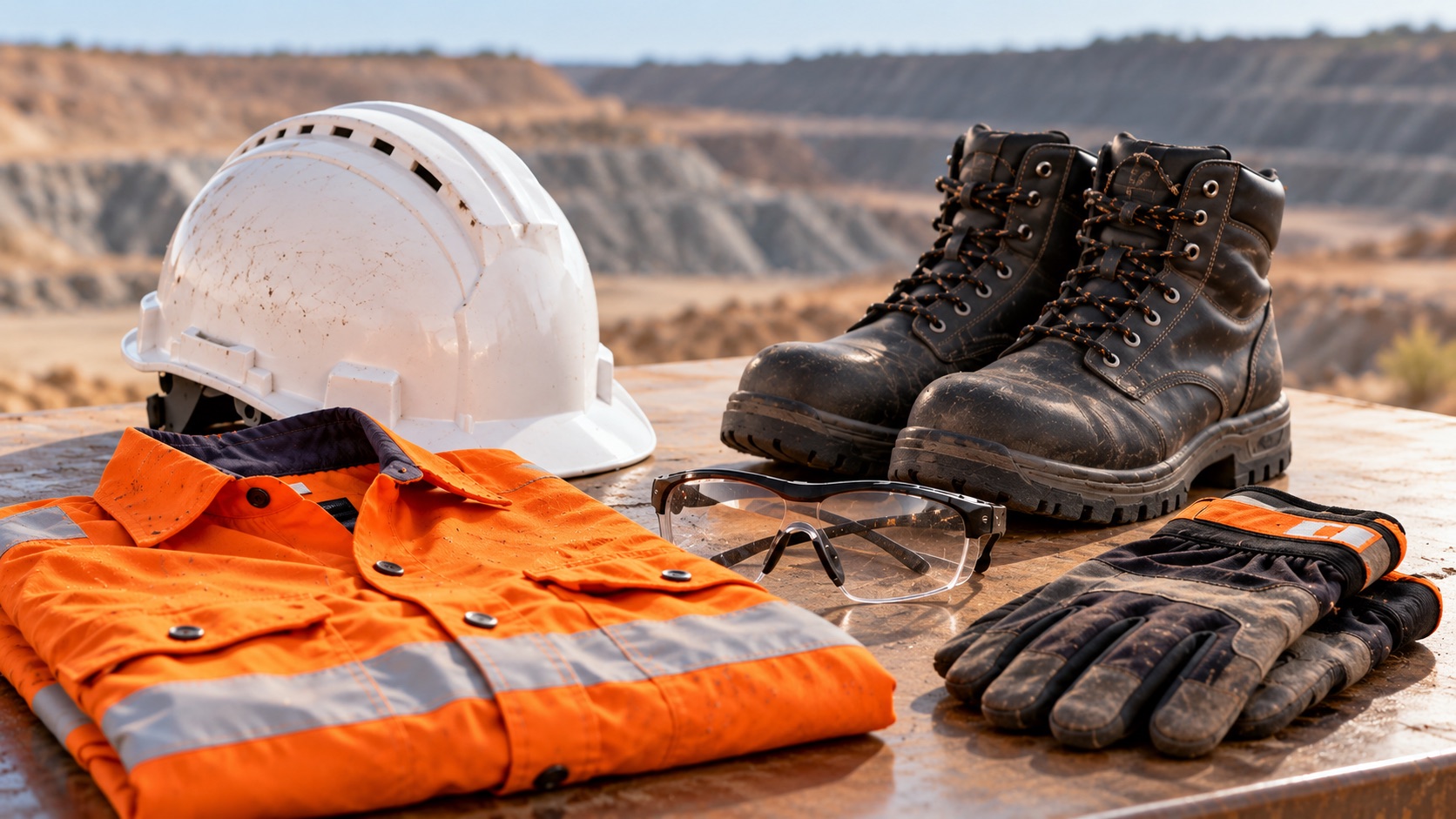
You'll normally be issued the PPE required for your role during your first day or first few days.
That can include:
- Hi-vis clothing
- Hard hat
- Safety glasses
- Gloves
- Hearing protection
- Safety boots, depending on the employer
- Cap lamp and belt if you're working underground
If you're buying your own boots, don't wear brand-new ones for the first time on a 12-hour shift. Break them in first. Your feet will thank you.
Meeting Your Supervisor and Crew
Usually after the inductions, you'll meet your supervisor and the people you'll work with.
Looking back, one mistake I think new starters can make is feeling like they need to prove how much they know.
But working on a real mine site is completely different from normal day-to-day life, whether you're a graduate, an operator or completely new to the industry.
My advice:
Sit down. Watch. Learn. Ask questions.
You'll learn far more by listening than by pretending you already know the answer.
And some of the most valuable people you'll learn from won't be engineers. Experienced operators, supervisors, tradespeople and surveyors can teach you an enormous amount about how mining actually works.
Your First Pre-Start Meeting
Most shifts start with some form of pre-start meeting, where the supervisor runs through the plan for the shift, safety issues, equipment and anything that has changed around the mine.
My first pre-start was extremely overwhelming.
Locations. Equipment numbers. Mining terminology. Abbreviations.
Everyone seemed to understand it instantly while I sat there wondering what half the conversation meant.
And this was after a mining engineering degree.
That's something graduates need to hear. University gives you the technical foundation, but it doesn't teach you the language of a specific mine.
So don't worry if your first pre-start makes almost no sense. Listen, write things down and ask someone afterwards.
A few weeks later, the words will start to click.
A few months later, it will all feel normal.
Your First Site Tour
If time allows, you'll get some form of site familiarisation.
On an open pit, that might mean seeing:
- Haul trucks
- The pit
- ROM pads
- Workshops
- The processing plant
Underground, you may drive through the portal and down the decline for the first time.
If you've only seen underground mining in lectures and videos, it's a memorable moment.
Suddenly the drives, the equipment and the ventilation are real, and the mine is a lot bigger and more complicated than any diagram from university.
Take it all in, but remember it's an active industrial site. Stay with your guide and don't go anywhere you haven't been told is safe.
How to Make a Good First Impression
After working with plenty of new starters, these are the things I notice straight away.
Be prepared. Know where you're meant to be and bring the equipment and paperwork you've been asked for.
Be on time. Flights, buses and pre-starts run on schedules. If the bus leaves at 5:15, don't arrive at 5:15.
Be open. Be open to learning, feedback and talking to people outside your own role. You don't need to prove yourself on day one. The people who learn fastest are usually the ones who are comfortable admitting what they don't know.
Don't pretend you understand. If you don't understand an instruction, ask. Saying "I'm not sure what you mean. Can you show me?" is far better than guessing.
Put the phone away. Especially during inductions and meetings. You're being given a huge amount of information in those first few days, so give it your attention.
Your First Night at Camp
After a long day, you'll head back to camp, which can take some getting used to.
You'll usually have your own room, plus access to things like:
- A mess
- Gym
- Laundry
- Common areas
- A wet mess, or camp bar
Some bigger camps also have pools and sports courts.
This is where the isolation can hit you again.
For night one, keep it simple:
- Eat a proper meal
- Get organised for the morning
- Check when your transport leaves
- Set your alarm
- Get some sleep
The first few shifts can feel long, especially if you're adjusting to 12-hour days or night shift.
Frequently Asked Questions
How long is a mine site induction?
It varies by site. Some inductions take several hours, while larger operations may spread induction and training across multiple days.
Do I need to bring my own PPE?
Most employers supply the core PPE required for the job. Safety boots vary, so check with your recruiter or supervisor before you fly.
Do you get paid during inductions?
For employees, required induction and training is typically treated as work time, but arrangements can vary. Check your contract or ask your recruiter if you're unsure.
Can I use my phone on a mine site?
Generally, yes in camp. On the mine itself, phone use may be restricted depending on the site and work area. Always follow your site's rules.
Final Thoughts
Your first day can feel like information overload, and that's normal.
Even with a mining engineering degree, I arrived at my first underground mine and realised how much I still had to learn.
Nobody expects you to understand the whole operation on day one.
Turn up prepared, be on time, stay open and remember:
Sit down. Watch. Learn. Ask questions.
Before long, the terminology and pre-start conversations that seemed so foreign will just become part of everyday life.
Ready to Start Your FIFO Journey?
If you're preparing for your first swing, the FIFO Guide helps you understand what to expect before you arrive on site.
It covers rosters, camp life, packing, money and settling into life away from home.