6 FIFO Mistakes I Wish Someone Warned Me About Before My First Swing
Six honest FIFO lessons about money, mindset, sleep, relationships and actually using your time off, the mistakes I wish someone had warned me about before my first swing.
12/09/20267 min read
Try explaining to a mate back home that you fly to work instead of driving.
I still remember my first swing and thinking: this is insane.
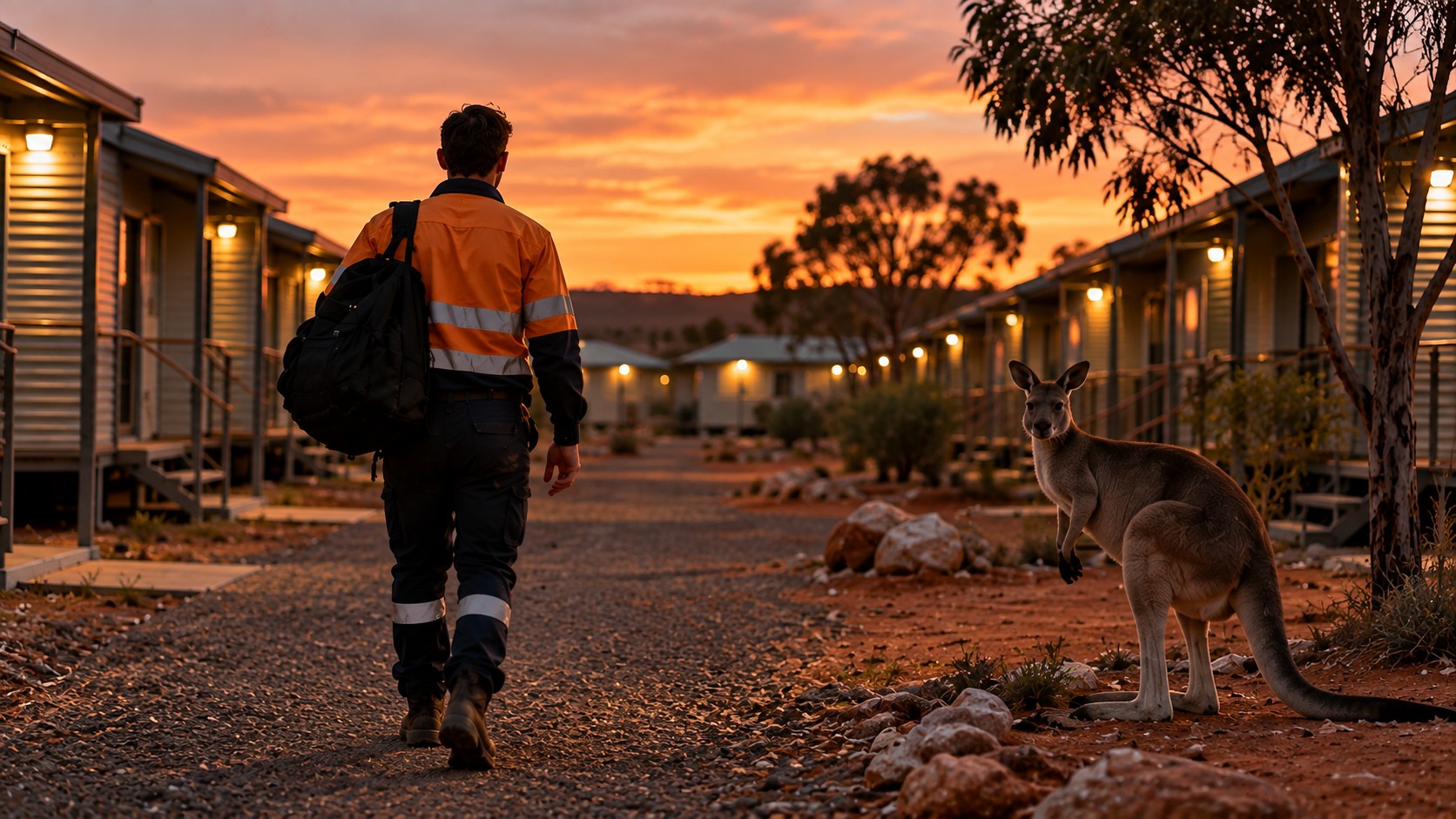
I'm getting on a plane to go to work. I'm sleeping in the middle of nowhere in Australia. There are kangaroos jumping around outside my room. There's a genuine chance I'll come across a snake.
And then every morning I'm heading underground into a mine chasing gold out of the ground.
It was one of those "Holy shit, this is actually my life now" moments.
At first, everything about FIFO feels different. The flights. The camp. The long shifts. The money. Even telling people back home what you actually do for work.
But once the novelty wears off, you realise the things that determine whether FIFO works for you have very little to do with any of that.
Here are six mistakes I wish someone had warned me about before my first swing.
1. Not having a financial goal for your FIFO money
When I started FIFO, I was suddenly earning good money.
So naturally, I bought some things.
A new iPad. A new phone. Golf clubs. A surfboard.
Nothing crazy. I wasn't blowing my entire pay cheque every month. But I also didn't have a plan for any of it.
The wake-up call actually came when I started reading books about personal finance.
They were talking about basic things: saving part of every pay cheque, having an emergency fund, investing for retirement, not living pay cheque to pay cheque.
And I remember realising:
I wasn't doing any of them.
I had this great FIFO income but hadn't actually built a system around it.
That's when my perspective on FIFO money started changing.
The advantage isn't being able to buy more stuff. It's having the opportunity to build financial security much faster than you otherwise might.
Build an emergency fund. Invest. Put money toward a house. Start a business. Learn how money actually works.
Whatever your goal is, have one.
Because if you don't decide where the money goes, you'll be surprised how easily a big pay cheque can disappear.
Decide what your FIFO money is supposed to achieve before lifestyle creep decides for you.
2. Thinking your degree makes you the smartest person underground
I've seen technically smart people struggle badly in mining.
Not because they weren't capable.
Because they wouldn't listen.
You might come out of university with an engineering degree and plenty of technical knowledge. Then you walk underground and meet a foreman who has spent 30 years working in underground mines.
If your first thought is that you're more knowledgeable because you're the engineer, you've already got a problem.
There are things happening underground every day that you simply cannot understand properly from an office on surface.
You need to go underground.
Watch how the job is actually done. Talk to operators. Talk to supervisors. Ask why they do things a certain way. See what works and what doesn't.
The practical side of mining is something you can only learn by being there.
And the best engineers I've worked with understand that technical knowledge and practical experience aren't competing with each other. You need both.
Your degree gets you into mining. Being willing to learn from everyone around you is what makes you good at it.
3. Not taking sleep seriously enough
My alarm goes off at 4:30am.
You'd think that would make putting my phone down and going to sleep at 9pm easy.
It doesn't.
After working 12 to 14 hours, sometimes your brain is still underground even though your body is lying in bed.
You're thinking about the problem you couldn't solve that day. What needs to happen tomorrow. Something that went wrong. Something you forgot to follow up.
And suddenly you're lying there at 9:30, 10:00 or later with another 4:30am alarm waiting for you.
I've found two things that help me switch off more than anything else: exercise and being social after work.
Going to the gym, doing some sport or just spending time talking to people forces my brain out of work mode.
And that's something I didn't appreciate when I started FIFO.
Sleep isn't just about getting into bed early. You need to figure out how to mentally leave work as well.
Because one bad night isn't the problem.
Stack bad nights across an entire swing of 12–14 hour days and you'll feel it.
Learn how to switch off before you learn the hard way that your body eventually will.
4. Wasting your days off doing nothing
This might be one of the biggest FIFO traps.
You finish your swing exhausted.
You fly home.
And for the first 24 hours, I genuinely need to recover. I'm often tired, sometimes I've got a headache, and I don't feel like doing much.
That's fine.
The problem starts when one recovery day turns into several days sitting in the apartment doing nothing.
No sport. No friends. No learning. No going anywhere.
Then suddenly it's almost time to pack your bag again.
Every time I've had a break like that, I've flown back to site feeling flat.
Compare that with the breaks where I've travelled, spent time with friends and family, exercised, learned about investing, worked on my own business or just got outside and actually did something.
I fly back feeling completely different.
FIFO gives you something most Monday-to-Friday workers don't have:
Big, uninterrupted blocks of time.
That's incredibly valuable.
But only if you actually use them.
Otherwise your life can quickly become:
Work. Fly home. Recover. Sit around. Pack. Fly back. Repeat.
And then you start wondering why FIFO feels like it's taking over your life.
Recover when you need to. But after that, use your time.
Your days off are one of the biggest things you're trading those long swings for. Don't waste them.
5. Underestimating what FIFO does to your relationship
This is probably the hardest one.
My wife hates FIFO.
And I understand why.
I'm away so much that the people I work with on site sometimes see me more than my own wife does.
That's a strange thing to realise.
When you're away, life at home doesn't stop. Your partner builds routines without you because they have to.
Then you come home and expect to slot straight back into normal life.
Except you're exhausted.
For me, the first 24 hours after getting home are usually recovery. Sometimes I'll have a headache. Sometimes I just want to lie on the couch and do absolutely nothing.
From my perspective, I've just finished a long swing and my body needs it.
From my wife's perspective, I've finally come home after being away all week...and now I'm lying on the couch.
Both perspectives make sense.
That's what makes FIFO relationships difficult.
It's not only about missing each other while you're away. It's the constant transition between two completely different lives.
If you're doing FIFO with a partner or family, talk about it.
Don't assume they'll just get used to it.
And don't forget that while you're the one flying to site, they're sacrificing something for your roster too.
6. Being afraid to ask stupid questions
When you first arrive on a mine site, almost everything is new.
The terminology. The equipment. The procedures. The people. The way things actually get done underground.
You'll have questions.
Lots of them.
And sometimes you won't ask because you don't want everyone to realise how little you know.
Ask anyway.
The longer I've worked in mining, the more I've realised that the people worth learning from don't expect you to know everything.
They expect you to be willing to learn.
And in mining, pretending you understand something can have much bigger consequences than simply looking stupid for 30 seconds.
Ask the operator.
Ask the foreman.
Ask the engineer sitting next to you.
Go underground and have someone show you.
It ties directly back to attitude. The moment you think you're too experienced, too senior or too qualified to ask questions is probably the moment you stop getting better.
I'd rather ask a stupid question than make a stupid mistake.
The Biggest Thing I'd Tell Myself Before My First Swing
If I could sit next to myself on that first flight to site today, I think I'd give myself one piece of advice:
Use this opportunity properly.
FIFO gives you two incredibly valuable things.
Money and time.
Yes, you work incredibly hard while you're away. But in return, you can earn good money and get blocks of uninterrupted time off that most people never have.
Don't waste either of them.
Use the money to invest, build financial security and create options for yourself.
Use the time off to travel, learn, build something of your own, look after your health and spend proper time with the people you care about.
And maybe, eventually, use both to create a life where you don't need to get on that plane anymore.
I still love mining. I still love a lot of things about FIFO.
And I'm definitely still figuring some of this out myself.
But I don't want to look back after ten or twenty years and realise I earned great money and had half my year off, but never really used either of them.
FIFO can be an incredible lifestyle. Just make sure you're using FIFO to build the life you want, rather than building your whole life around FIFO.
Want to Get Into Australian Mining?
If you're trying to land your first mining role, I've put together the Mining United F.C. Job Roadmap — a free step-by-step guide for engineers and mining professionals looking to break into the Australian mining industry.
Mining United F.C. is built by mining professionals, for mining professionals.
Follow @miningunitedfc for more on FIFO life, mining careers and the Australian mining industry.